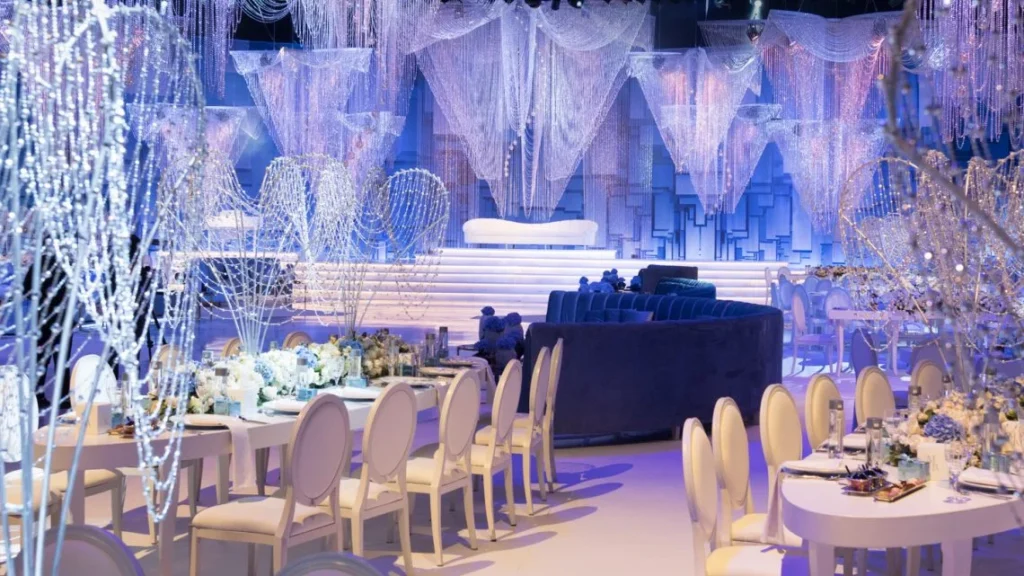
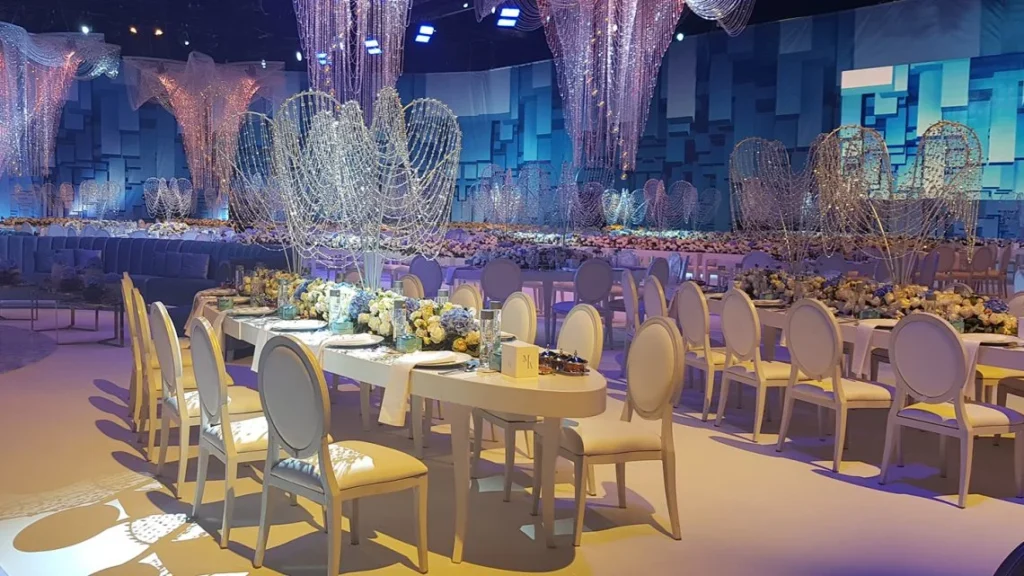
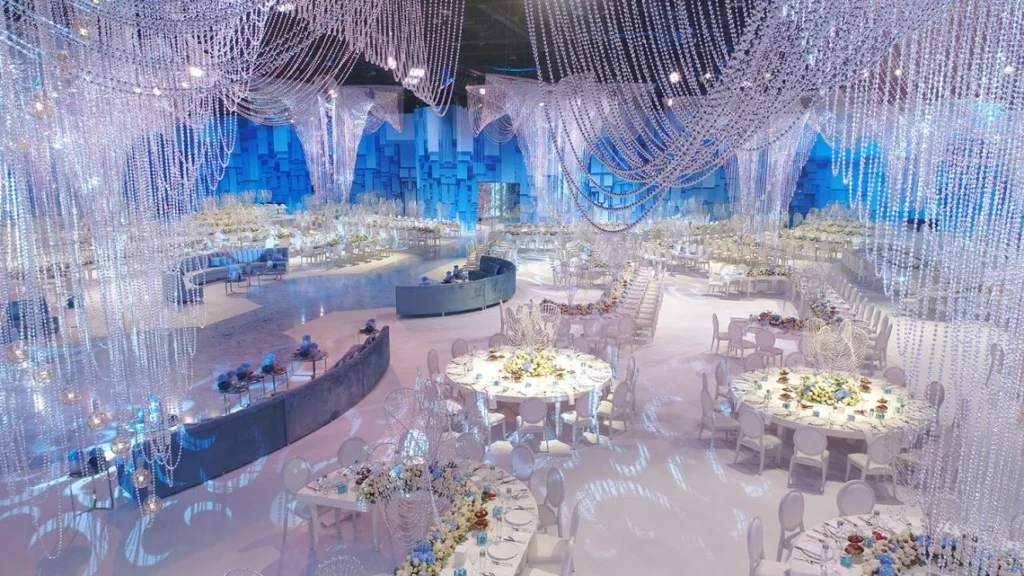
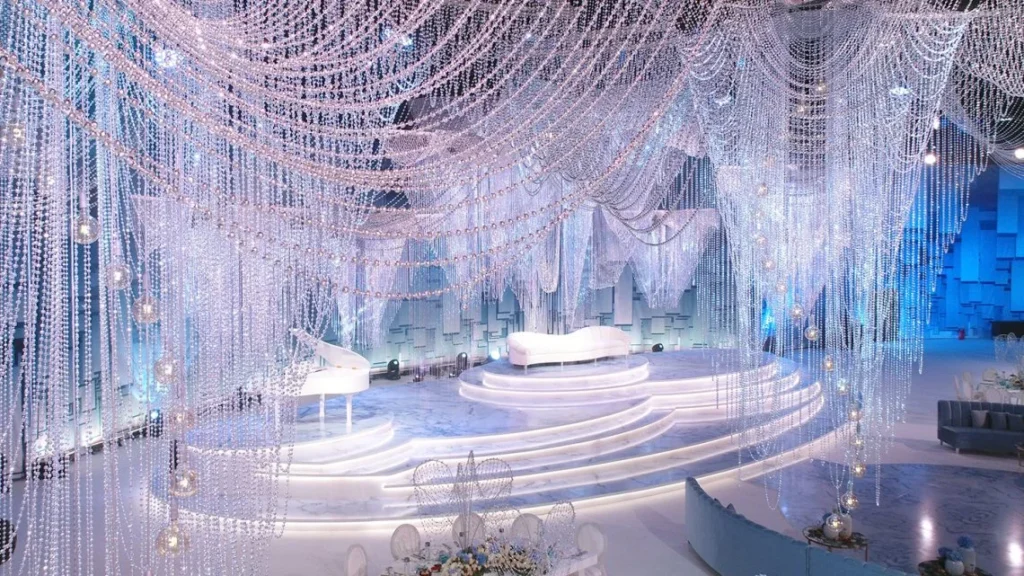
If there is one element that defines Ethereal Beauty above all others, it is the way it handles light. Not the bright, even illumination that most event spaces default to — and not dramatic theatrical lighting that draws attention to itself — but something in between and something more considered than either. Light that seems to come from within the space rather than from any identifiable source. Light that gives every surface, every bloom, every piece of fabric a luminous quality that makes the room look like it is being filmed through a lens that softens the edges of everything just slightly.
This is technically very difficult to achieve. It requires precise calibration of colour temperature, diffusion, and intensity across the entire space, with different solutions for the ceremony and reception environments, and adjustments as the natural light outside changes through the evening. It requires a team that understands light not as a utility but as a design material. The photographs tell you the result. The film tells you how it moves.
Ethereal Beauty is grand — the scale of this celebration and the completeness of the venue transformation make that clear. But its grandeur is of a specific and unusual kind: it does not press itself upon you. There is a delicacy to it, even at scale, that prevents the space from feeling heavy or overwhelming. Fabrics soften what architecture makes rigid. Florals introduce organic irregularity into an environment that would otherwise feel too perfectly controlled. The table settings carry the same lightness as everything around them — arranged with precision, but a precision in service of ease rather than formality.
The palette occupies the range between ivory and the softest gold, with the kind of white that holds warmth rather than coolness. Nothing is stark. Nothing is hard. The room has the quality of something that exists in a particular kind of dream — the kind you wake from slowly and try to hold onto.